

Topper studies, full course
In-depth professional training in toppers: preparation, custom fitting, working techniques, installation, maintenance and hands-on practice.
- Length
- 30 hours
- Price
- 26,997 ₪incl. VAT
- Included
- Digital course
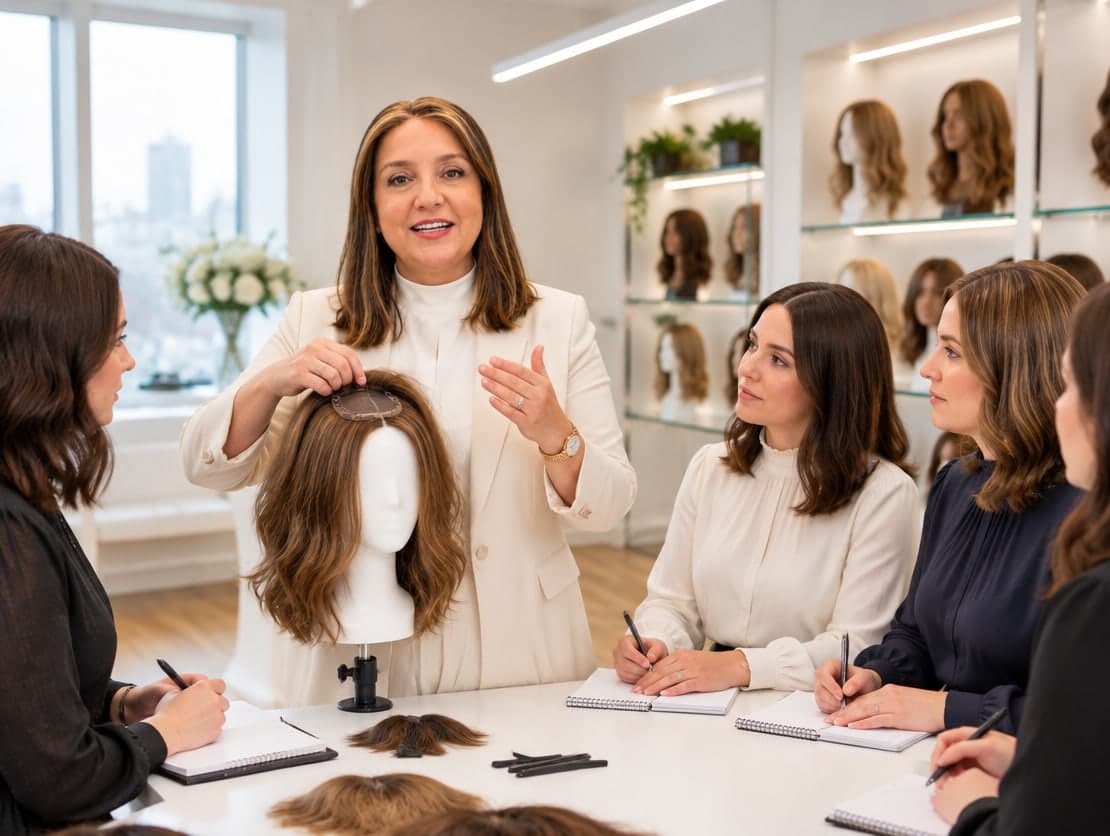
What the course focuses on
- 01Preparation
- 02Custom fitting
- 03Working techniques
- 04Installation
- 05Maintenance
- 06Hands-on practice
- Sessions
10 sessions of 3 hours: 24 hours of technical and hands-on training, and 6 hours of commercial and business training.
- What you'll know at the end
- Command of the three main working methods: top lace, mono lace and skin (PU).
- Hands-on experience in ventilating, fitting, repairing, thinning, colouring and finishing hair units.
- Tools for building a consultation and sales process, sourcing products from suppliers and running a retail operation.
- The actual level of skill depends on prior experience and on the amount of practice during and after the course.
- Certificate
A certificate of completion from the academy, subject to at least 80% attendance, completion of the practical exercises and passing the final assessment. The certificate is not a government certification or a professional licence.
More details soon
Who it is for, Admission requirements, Practice, Teaching team, Start dates, Frequently asked questions will be published here once confirmed. Until then, you can get all the details in a consultation call.
Curriculum
10 sessions of 3 hours: 24 hours of technical and hands-on training, and 6 hours of commercial and business training. Click a session to see what it covers.
Session 1: Introduction to toppers, hair types and bases
- Types of toppers, hair extensions and the base constructions used in the field.
- Natural hair, raw hair and processed hair: differences in quality, thickness, texture, flexibility and lifespan.
- Top lace, mono lace and skin (PU) bases: construction, thickness, transparency and durability.
- Combination bases, production methods, density levels, partings and hairlines.
- Practice: identifying base types, hair types and quality grades.
Session 2: Professional ventilating on top lace
- Top lace construction and the characteristics of the mesh.
- Ventilating tools, needles, preparing the hair and dividing it into working sections.
- Ventilating with single and double knots, according to the mesh construction and the desired look.
- Direction of hair growth, working angles and parting placement.
- Working on thin areas, adding hair and repairing ventilated areas.
- Practice: ventilating on a top lace base, creating a parting and building gradual density.
Session 3: Professional ventilating on mono lace
- Mono lace construction and how it differs from top lace.
- Suitable needles and tools, and ventilating techniques suited to the mesh construction.
- Working with different knots while keeping density and hair direction consistent.
- Creating a parting, filling thin areas and building volume.
- Adding new hair to an existing unit and spotting knotting errors.
- Practice: ventilating on a mono lace base, reinforcing and filling thin areas.
Session 4: Ventilating and hair injection on a skin (PU) base
- Types of skin (PU) base, thicknesses and material properties.
- The differences between ventilating on mesh and injecting hair into a skin (PU) base.
- Inserting hair into the base according to the production method and the material structure.
- Hair exit angle, growth direction, and creating even density and a natural look.
- Repairing thin areas, replacing damaged hair and the limitations of working on thin skin.
- Practice: injecting hair into a skin (PU) base and repairing a thin area.
Session 5: Customisation, measurements and altering unit structure
- Professionally measuring and fitting a topper to the head shape and coverage area.
- Identifying a unit that is too large, too small or unsuitable.
- Reducing and enlarging units, and changing circumference, depth, width and shape.
- Attachment and fixing methods: clips, invisible thread, beads and sewing.
- Practice: measuring a unit, reducing a base, altering its structure and fitting it to individual measurements.
Session 6: Thinning, density, blending and a natural finish
- Hair density and its effect on the final look.
- Professional methods for thinning hair units and creating a gradual transition to the natural hair.
- Blending techniques at the front, the sides, the hairline and the parting area.
- Layered cutting, shaping the ends and adapting the volume to the face shape.
- Practice: thinning a unit, blending and creating a natural finish.
Session 7: Colouring hair units, shades and colour matching
- Colour theory and matching the topper shade to the natural hair.
- Identifying natural hair, coloured hair and hair that has been lightened or chemically processed.
- Choosing colours, developers and materials, and full colouring and shade changes.
- Working without damaging lace, mono and skin bases, and strand testing before treatment.
- Colour corrections and neutralising unwanted tones.
- Practice: colour diagnosis, preparing a formula and matching the shade on a hair unit.
Session 8: Repairs, upgrades and restoration of hair units
- Assessing the condition of an existing unit and identifying defects that need repair.
- Repairing damaged ventilated areas and replacing missing hair.
- Repairing or replacing clips, reinforcing the base and mending small tears in the mesh.
- Restoring units after prolonged use, and upgrading colour, density, cut or structure.
- Weighing whether a repair is worthwhile compared with replacing the unit.
- Practice: assessing a used unit, planning its restoration and carrying out repairs.
Session 9: Client consultation, sales psychology and retail fitting
- The aesthetic and emotional needs of clients interested in toppers and hair extensions.
- Building trust, listening and conducting a sensitive, discreet conversation.
- A professional consultation process: understanding needs, coverage areas, product selection and setting expectations.
- Explaining the differences between products and the factors that affect price.
- Preparing a quote, handling objections and closing a sale respectfully, without pressure.
- Practice: a full simulation of a consultation, fitting and quote.
Session 10: International sourcing, suppliers and running a topper retail business
- The supply chain for toppers, hair extensions and raw materials.
- The differences between a factory, a manufacturer, an agent, a wholesaler and a trading company.
- International suppliers in countries such as Vietnam, China and India, and evaluating supplier quality.
- A professional order specification, samples and quality checks before a commercial order.
- Basics of importing to Israel, inventory management and building a price list for services and products.
- Final practice: a supplier order specification, calculating product cost and pricing a sales offer.
Graduates speak
People who have already taken this path, in their own words. Videos in Hebrew.
Hairstylists, take note
Custom fitting for wigs and toppers
A Haifa salon, a new income stream
Roy Levi, salon owner
Learning from the best
Wig making and hair extensions course
Want to hear more?
A short consultation call will help check whether the course suits your experience and goals.
Book a consultation callOr: Topper studies, short course